Boston Gothic:
Reading the dark side of Boston’s literary past
A 6-Week, In-Person Literature Class
with instructor Jessica A. Kent, Founder & Director of Literary Boston
Registration is now closed! Look for more classes in Winter/Spring 2027!
“Being able to deeply discuss a range of texts and bounce ideas off of everyone was my favorite part. Jessica was very open to hearing different points of view and encouraged us to think about how we draw conclusions by backing theories up with the text or further research, which distinguishes this class from the average book club and was exactly what I was looking for.”
– Samantha, Boston Classics cohort 1

Explore the darker side of Boston’s literary history through gothic tales of guilt, haunting, inheritance, obsession, race, gender, and the uncanny.
Boston Gothic is a six-week, in-person, discussion-based class that’s more immersive than a book club, but far more accessible than a traditional academic course.
We’ll read, analyze, and discuss works by authors who once called Boston home, exploring the many forms the Gothic can take — from psychological darkness and supernatural terror to ghosts, mystery, haunted landscapes, and horror.
Together we’ll dig into themes, language, historical context, and connections between authors. I’ll guide the discussion and make the texts accessible, even if you’ve never done close reading before. Class begins Thursday, October 1 (just in time for spooky season)!
Tentative Syllabus
Week 1: Short stories by Nathaniel Hawthorne, exploring the darkness of sin and the soul.
Week 2: Short stories by Edgar Allan Poe, exploring the psychological and supernatural.
Week 3: A work (TBD) by A. M. Barnard, the pen name under which Louisa May Alcott wrote her sensational Gothic thrillers.
Week 4: Short stories by Ralph Adams Cram, a Gothic architect and fiction writer whose work was praised by H. P. Lovecraft.
Week 5: The Turn of the Screw by Henry James — the classic Victorian ghost novella.
Week 6: Of One Blood by Pauline Hopkins, one of the earliest Black writers of mystery and horror.
A full syllabus and reading materials will be shared with registered participants in advance of the first class. Poems, essays, and short fiction will be provided to you as part of the cost. You will be responsible for obtaining the novels: purchasing, borrowing, or reading online.
“Everyone in our class was very participatory and loved that everyone's unique experiences and backgrounds brought different perspectives to the discussion. I also loved the variety of material. It really felt like I was getting exposure to new authors and poets I would not have otherwise read. It also helped me to flex my ‘academic’ muscles which have not gotten much exercise since college.”
– Lauren, Boston Classics cohort 1
Venue
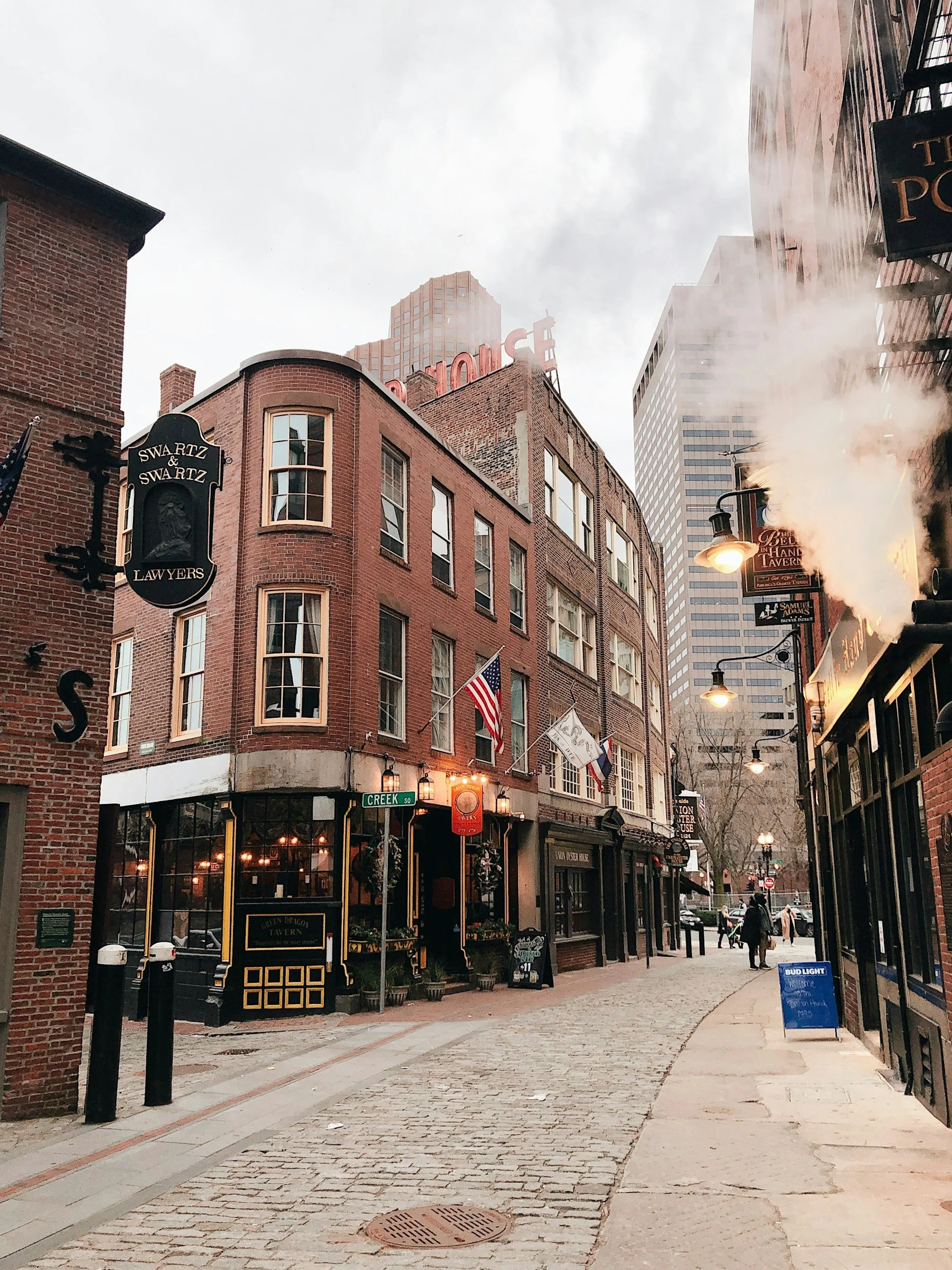
TBD, but likely the Boston Public Library in Copley Square.
Group Size
Capped at 10.
Class Logistics and Schedule
Meets on Thursdays, 6pm-8pm, starting October 1:
Thursday, October 1, 6pm–8pm
Thursday, October 8, 6pm–8pm
Thursday, October 15, 6pm–8pm
Thursday, October 22, 6pm–8pm
Thursday, October 29, pm–8pm
Thursday, November 5, 6pm–8pm
Cost
$300.
Instructor
Jessica A. Kent, founder and director of Literary Boston. You can learn more about me below!
Cancellation & Refund Policy
Because space is limited and this seminar requires advanced planning, refunds are available as follows:
Up to 14 days before class begins: full refund minus a 10% processing fee
7–13 days before class begins: 50% refund
Fewer than 7 days before class begins: no refunds
If a spot becomes available, it will be offered to individuals on the waitlist in the order received.
More questions about the class experience? See the F.A.Q below!
“I loved the research and background knowledge you brought to us at the start of every class. Your enthusiasm for the texts and author biographies was infectious and inspired me to read more deeply and with more awareness of the texts’ contexts.”
– Matt, Boston Classics cohort 1
Your Instructor

Hi! I’m Jessica, and I’m the founder of Literary Boston, a cultural initiative that promotes the local literary community, past and present. Other literary roles include literary history tour guide, library assistant, bookseller at both indies and Barnes & Noble, book festival director and social media manager, lit mag founder, lit org board member — and, of course, writer.
I hold a BFA in Creative Writing from Emerson College and an MA in Literature from Harvard University (Extension), where my thesis on Moby-Dick and Calvinism won the Director’s Prize (yes, I wrote that for fun!). During my time in my master’s program, I tried to take as many classes in American Literature as I could, specifically 19th c. New England literature. And yes, there was a bit of literary theory in there, too.
My writing has appeared in the North American Review, the Emerson Review, Writer’s Bone, and others, and my short story “Rose” received the Leah Lovenheim Award for Short Fiction. I’m also a freelance ghostwriter with over a hundred pieces published out there on the web. You can find my portfolio here.
I recently graduated from GrubStreet's Novel Incubator program, a year-long novel writing craft intensive, where I worked on a novel about paramedics in 1970s Boston (still in progress!).
Finally, my passion for “digging into the text” led me to run a book club for a few years we called “English class over dinner,” as well as a nine-month informal “Moby-Dick Class” where I guided friends through the novel.
“I really enjoyed being pushed to read out of my comfort zone. I would not normally read poetry or these kinds of texts, and I really appreciated the exposure to them and the discussion of them with the group.”
– Attendee, Boston Classics cohort 1
Ready to get reading together?
Register below!
After you click “Book Now” and fill out the form, you’ll finish your booking by going to the Shopping Cart at the top right and checking out!
Boston Gothic
Filters
No results found
No results match your search. Try removing a few filters.
F.A.Q.s
Who is this class for?
Curious readers who want to go deeper into the reading experience, whether you loved English class or never quite had that experience. Past participants mentioned taking this class because they missed discussions from English class, wanted to learn more about Boston and its authors, were looking for something more than a book club, or wanted to connect with other local, literary-minded people.
What if I have no background or experience reading literature?
You’re still welcome! This class is designed for beginners and advanced participants alike. And many attendees in the first cohort had little background in literature, and probably got the most out of class discussions.
What is class discussion like?
The best English classes are discussions, where we all dig into the text, figure out what it’s saying, and co-create knowledge together. I don’t lecture, nor will I tell you what to think about the texts. Instead, I guide discussion with thought-provoking questions designed to bring you into deeper thinking and those “aha” moments.
What if I’m not comfortable speaking in a group?
That is totally fine! I’ll never call on anyone, and you can participate as much or as little as you would like. In the first cohort, participants participated at varying levels, though many did feel comfortable enough with the group that everyone participated in some fashion.
How is this different from a book club?
This is more guided and focused. We’re doing close reading, making connections across texts, and building interpretations together. Consider it a “light” literature class, without tests, quizzes, or grades!
What do people get out of it?
I’ll let the first cohort tell you:
“I really enjoyed being pushed to read out of my comfort zone. I would not normally read poetry or these kinds of texts, and I really appreciated the exposure to them and the discussion of them with the group.”
“It really felt like I was getting exposure to new authors and poets I would not have otherwise read. It also helped me to flex my ‘academic’ muscles which have not gotten much exercise since college.”
“Being able to deeply discuss a range of texts and bounce ideas off of everyone was my favorite part.”
“I also enjoyed learning the literary history of the Boston area, which I have grown up in and feel a newfound sense of inspiration after learning about all the amazing people that lived and wrote here.”
“As a beginner to literary studies, I absolutely loved this class! … I learned so much from the lively discussions, and the sense of community made it a welcoming environment.”
“[Jessica’s] enthusiasm for the texts and author biographies was infectious and inspired me to read more deeply and with more awareness of the texts’ contexts.”