Pandemic Walks: Assessing Boston's Civil War Narratives, Part III
by Kathleen Stone
July 1, 2021
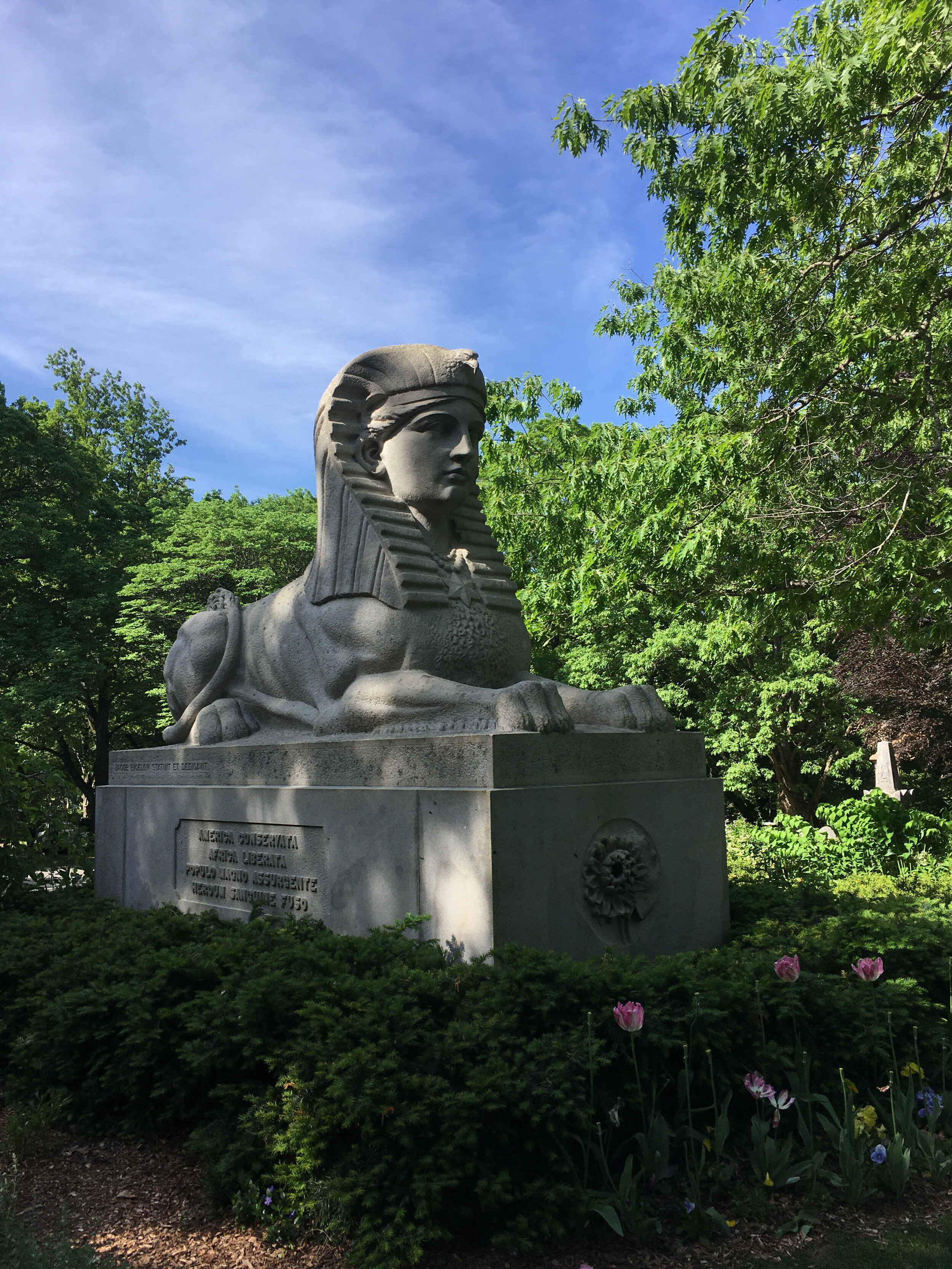
The Sphinx at Mount Auburn Cemetery | Photo by the author
After seeing the Civil War monuments in Forest Hills and on Boston Common, and reading about Martin Milmore, the sculptor behind both, there was one more I wanted to see: the Sphinx at Mount Auburn Cemetery. On a winter afternoon my husband and I drove to Watertown, intending to walk in the cemetery, but found it closed. Not going places was part of the pandemic experience, as much as our leisurely walks around the city. When Mount Auburn reopened to visitors in the spring, we went back.
The Sphinx was conceived by one individual, Dr. Jacob Bigelow. He wanted to pay tribute to those who died fighting for the Union, with a memorial different from those that were sprouting up on town greens all over New England. He had in mind a timeless icon, with a message that would resonate across generations.
Bigelow was a physician, a botanist, and a Latinist. He taught courses in the "useful arts" at Harvard, a field he preferred to call technology. Long before the Civil War, he formed a voluntary association to purchase a bucolic site for burial. English gardens and the Père Lachaise cemetery in Paris inspired him, and the Horticultural Society carried out the design, with native species of trees and flowers that melded rural and urban elements. Mount Auburn was the first cemetery of its kind in the country.
Read the full article with a Literary Boston subscription.
