TBR and the Importance of Writing Conferences
by Jessica A. Kent
January 23, 2026
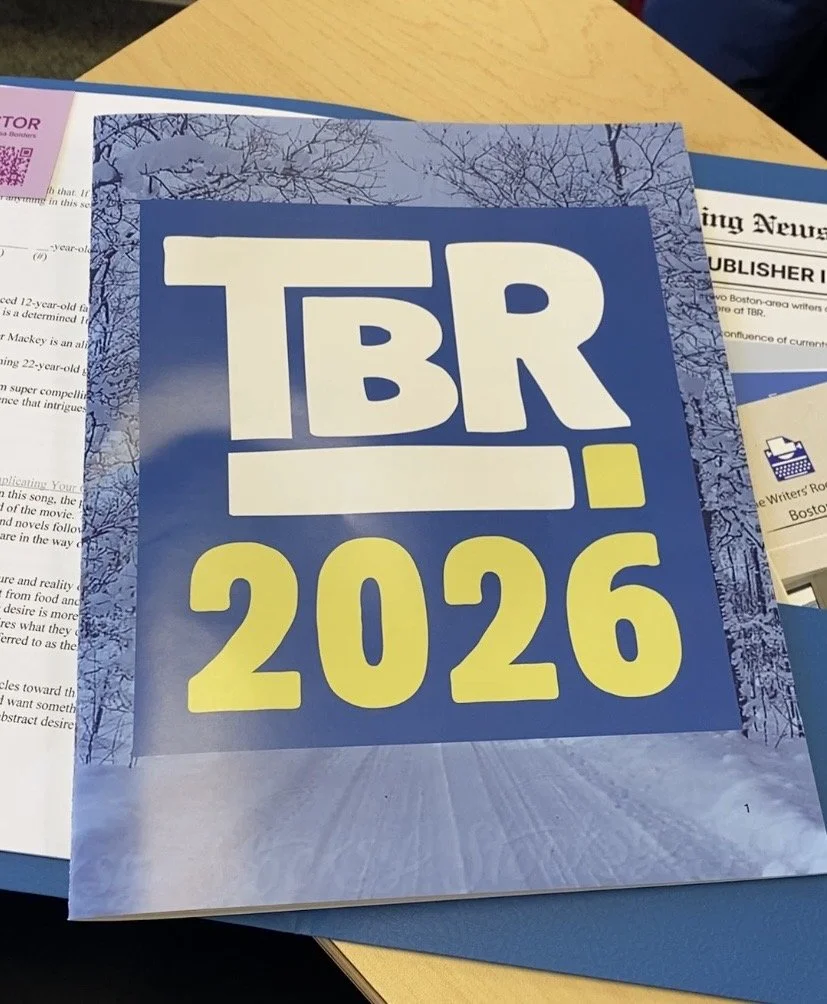
Ready for a busy day at TBR!
I slid into the back of the classroom for the first session of the day, the chairs already filled with attendees fresh from registration getting settled with their coffee, schedules splayed on the desks, pens poised above the handout, ready to take notes. After an introduction to the session “It’s a Great Idea — But is it a Novel?” instructor Lisa Borders led us in an exercise to articulate what our book is about. After a few moments of quiet creativity, she asked for volunteers to share, and a writer in front of me told the class the one-sentence idea for her book. In front of her, another writer — a stranger, fellow attendee — turned around at the premise, and thoughtfully nodded the kind of nod that says, “I’m intrigued. Tell me more. I want to read this.”
And that’s how the day would go at last weekend’s inaugural TBR (To Be Read) Conference: learning from industry professionals at the front of the room and being inspired by others in the chairs next to us.
Because We All Want To Be Read…
The TBR Conference was announced in early 2025 as a new writing and publishing conference for both writers who haven’t published a book yet, and for those writing and selling past their first books.
The conference was co-founded by Whitney Scharer and Sonya Larson, both writers and veteran literary event organizers, as a way to fill a gap in the community. “Writers crave community. They asked for a gathering, emphatically, where they can learn, make connections, and enjoy one another’s presence,” said Larson.
“I went to my first writing conference when I moved to Boston, and I remember that feeling of energy, of all of these people who are just like you,” said Scharer. “You find your tribe at a conference like this. In recent years, a lot of those events have faded away for various reasons. For years, I've wanted to start something that was similar to that and feel that energy again.” As for what she hoped attendees would take away from the conference, it’s “excitement about continuing their writing. One of the things that we wanted to do here was bring positive spirit to the whole process.”
On Saturday, January 17, writers and industry professionals gathered at the Lesley University campus in Cambridge. The sold-out conference featured over 80 speakers across 36 sessions, which covered six different tracks in craft, publication, and book-making. The atrium featured tables of literary resources from local and national organizations, as well as book sales from Porter Square Books.
TBR also featured a Publishing Matchmaker where querying authors matched for meetings with agents and editors. Unlike other conferences that rely on authors choosing the agents they want to meet, the Publishing Matchmaker program asked authors to submit summaries of their novels first. Then, agents would choose which projects they were interested in and which authors they wanted to talk to. A few friends mentioned they were meeting with interested agents who never would have been on their radar without this approach. And an agent friend said it was a great chance to give feedback to querying authors they were excited about, even if they never went on to work together.
Co-founders Whitney Scharer and Sonya Larson giving a TBR update at cocktail hour.
“There's a better way for writers to find agents who are a good match for them,” said Larson about the Publishing Matchmaker. “Both parties, the agent and the writer, will walk into those meetings knowing there's at least some initial interest in each other. Our end goal is to make every meeting productive and meaningful and not waste time, money, or energy for either the writer or the agent. That's the goal, and I think it's working.”
Sessions ran from 9:00am to 4:00pm, followed by a cocktail hour at the Lunder Arts Center next door. That was followed by an afterparty at La Fabrica in Central Square that featured “Literary Confessions,” passed appetizers, live music, a photo booth, community connection, and even literary tarot readings.
I popped around to sessions, chatted with friends in the hallway, took notes, caught up with past acquaintances, learned about new literary organizations, met new people, and toasted creative endeavors. These events are always fun, but this year I was asking, “What’s the bigger importance of conferences like this?”
The Importance of Craft and Business
There once was a time when all a writer needed to do was excel at their craft, and the rest would be handled by publishing professionals. That’s no longer the case in an industry where more and more business responsibilities are being shifted to the author.
Many writing programs still subscribe to that craft-only approach: we’ll teach you how to be great at writing, but not the business beyond “The End.” (I always think about the time in my MFA program when the professor asked if anyone was actively sending work out. I was the only one in a class of 20 to raise my hand. The answer to “Why not?” was, “We don’t know how.” Yet the program never went on to offer any classes or instruction on the business of submitting, querying, or publishing.)
But a craft-only focus does a disservice to authors today, which is why craft and business conferences like TBR, AWP, and the now-defunct The Muse and the Marketplace are so important. Not only do these types of conferences give authors the tools and inspiration to write their work, it gives them baseline guidance on how to write a query letter, how to work with agents and editors, how to market their book, and the state of publishing today.
For example, the session “How the (Book) Sausage Gets Made & What Authors Need to Know About It” went beyond what writers typically learn about querying, working with agents, and initial publishing steps to focus on the back half of publishing: how agents and editors work with sales reps and booksellers, how book gets on a shelf or table at a bookstore, what meta data is, and how to build relationships at the local level. A few writers afterwards said they hadn’t heard those insights before, yet it’s all part of the journey, too.
Other sessions that exposed authors to the business of writing included “Researching Agents: How to Find the Right Fit for You,” “Money: Let's Talk About It,” “How to Write an Amazing (and Effective) Query Letter,” “The Marketing Hustle: Getting Your Book Out There Without Losing Your Mind,” “Copyright, Contracts & Subsidiary Rights 101: What Every Agent, Editor, and Author Should Know,” “Partnering with Your Local Bookstore,” “The Author’s Brand: Building Beyond the Book,” and “The State of Publishing.” These are sessions you’d be hard-pressed to find in any MFA program, and are rare to find at local writing centers (though Boston’s own GrubStreet does offer classes and sessions to help writers understand the industry).
Talking about how the book sausage is made, with Paul Swydan, Susie Albert, Rebecca Rodd, Lauren Scovel, and Keith Arsenault.
Having a variety of sessions about publishing industry topics also means that everyone is in the same room together. Conferences that combine craft and business serve to break down the solitary silos in the writing industry as well: authors get to meet their local booksellers, writers just starting out get to meet experienced authors and hear their “war stories,” authors get to meet agents, agents get to meet potential clients, publishers meet agents they’ve only ever met via email... The black box of the writing and publishing industry gets opened up, letting the light of connection and humanization inside.
“It's important to have conferences like this so that we all remember that we're real people, and that we all succeed together,” said Paul Swydan, founder and owner of The Silver Unicorn Bookstore in Acton, who was a panelist at the “(Book) Sausage” panel. When asked about the importance of having booksellers participate in conversations throughout the conference, Swydan said that “getting the experience of what we're trying to do when a book comes into the world is super helpful — not just for authors, but for everyone in the room. It's important for us to all understand how we're approaching the exact same thing.”
More Words About Craft
But let’s get back to craft.
It’s such a pleasure to sit in a room listening to authors go deep on novel structure, building tension, stakes, characterization, pacing, how to outline, and how to revise. Conferences like this really demonstrate how craft isn’t something for academic courses, but is the muscle, bone, and electric spark of making work come alive.
For local author Timothy Deer, the conference’s appeal was looking forward to “a great roster of speakers with both amazing names and people who really inspire me, and the chance to hear them in person.” He mentioned Michael Lowenthal’s memoir session and “needing to be honest with yourself about why you're telling a story, which I think was so interesting as a fiction writer. I don't think about the why for me as the writer. I think about the why for the character.” He also mentioned Christopher Castellani’s “Art of Perspective” session, where, in addition to talking about first person, “it was really interesting to take a step back and think about it in a third person close or omniscient point of view. How is perspective important?”
For writers who have been at this for a while, craft sessions renew the inspiration for our work. A writer next to me said she was more inclined to go to the craft sessions, even though she was querying, because it motivated her to get back to writing.
For newer writers, craft sessions introduce how writing is an art and a discipline. And in a world today where the barriers to entry have fallen around self-publishing, and many writers are encouraged to “write on vibes” alone, conferences like this can be a great introduction to those deeper elements of how to construct a narrative that engages, entertains, and enlightens a reader. As one first-time writing conference attendee posted on Instagram: “The sessions genuinely made me want to go back to school … to study craft. To be in rooms where people care this much about stories, language, structure, and voice.”
Building Community and Connection
Afterparty readings, featuring Grace Talusen.
Beyond learning and receiving from the various sessions, this type of conference does something that is so key in a siloed industry: it builds community, or at least lets us know we’re not alone out here.
Writing is a solitary endeavor, and even if you have a group of writers around you, the next steps of the publishing journey are often still those black boxes waiting to be opened. I’ve been in writing programs and classes, and was also a bookseller for ten years, so I had insights into the bookends of the publishing journey. But agents and what they were looking for seemed such a mystery to me until I met agents face-to-face and heard them speak about their work.
Come to find out, we’re all just book nerds who are passionate about writing and reading, and want to share great work with the world. And we all play our parts and contribute verses in our own unique ways.
Even if turning to a stranger next to you and starting a conversation is too daunting, there’s something about just being in the same room and space as hundreds of other writers — each with whole worlds inside their heads, begging to be put on paper — that makes it all feel less lonely.
“The importance of being in-person like this is so we can see each other's faces,” said Michelle Hoover, novelist and Novel Incubator co-founder and instructor. “I think the writing community has really missed this in the last several years, because a huge part of being a writer is working with other writers, meeting other writers, and getting to know other writers. You can only really do that by bumping into them in the hallways, going out to lunch with them, going to a party with them. That's the most significant thing.”
At the end of the day, we gathered at the afterparty where, before the dancing began and cake was passed around, a few authors took to the stage to read their “literary confessions” in front of the audience. When each one stepped up to the microphone, we cheered and clapped for them and their work, and their willingness to share. I’m expecting there to be a second year of TBR, so we can all once again connect, recognize each other, and continue cheering each other on.
Note: The author was given a press pass to cover the conference.